10/10/14
News
A first educational project started last week in some elementary schools in villages located in remote areas of the Gulf of Alaska. Thanks to the collaboration between the UAF (University of Alaska, Faierbanks) and the REACH (Raising Educational Achievement through Cultural Heritage) association, Alessio Gusmeroli, from the International Arctic Research Center and consultant of the Macromicro Association, using the photographic comparisons made in Alaska during the last expedition of the project On the Trails of the Glaciers as an educational support, explained to the students the phenomenon of glacier retreat and the connection with climate change.
Below we offer a brief report on the project and a gallery of photographs:
The icy waters of the Gulf of Alaska bathe numerous small villages, disconnected from road networks. Villages, remote, isolated, reachable only by plane or boat. These villages represent a little-known side of Alaska: the Rural Alaska, the Alaska of the Indigenous people who have inhabited these wild moors for millennia. In the Prince William Sound region, populated by Aleutiq Indians, the population of the villages rarely exceeds one hundred, and people still practice the traditional lifestyle based on hunting and fishing. The schools in these villages are a key meeting point between Native culture and the U.S. educational system, and it is in these remote schools that we are working to raise awareness of Earth science and climate change.
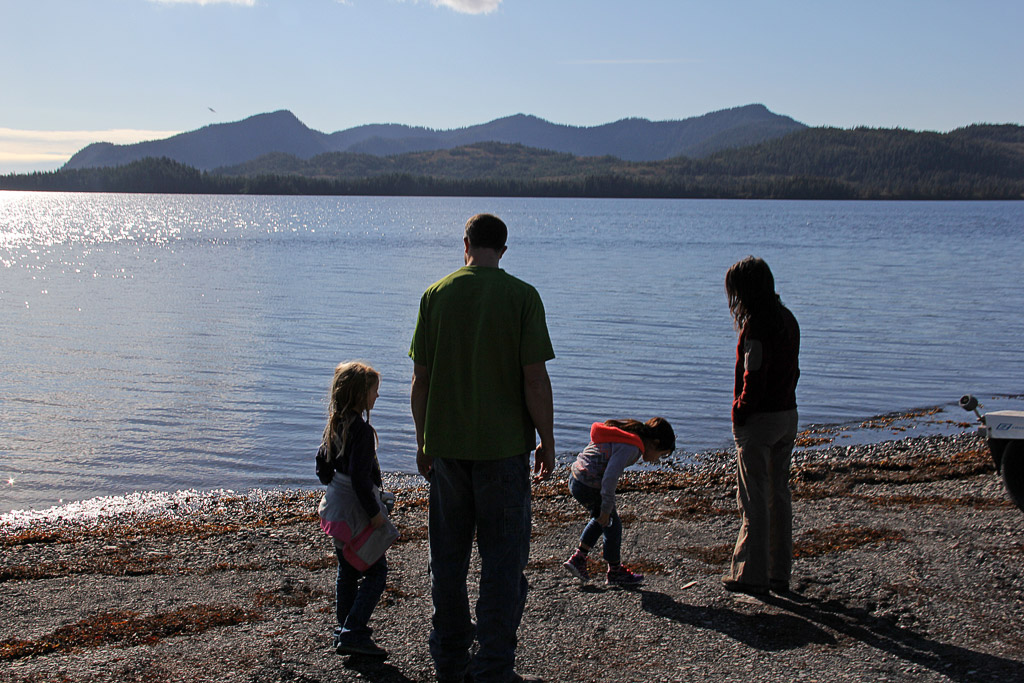
In a sensational four days we visited the villages of Tatitlek and Chenega bay. The first village Tatitlek, is located in a lovely bay, surrounded by green fjords and mountains, covered by the majestic vegetation of the Alaskan rainforest. The village consists of a group of crates, an Orthodox church, and a small school that houses about 20 children and young people of varying ages, from 3 to 18. In the school an American flag to remind us that, even here, in an environment so far from the big cities, we are in the United States.
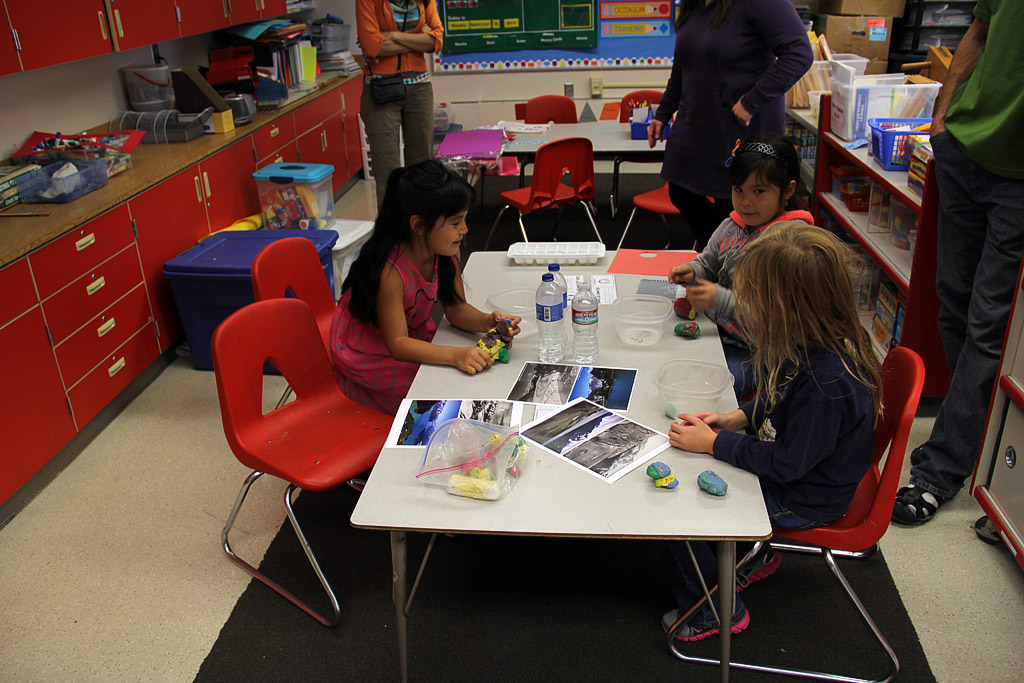
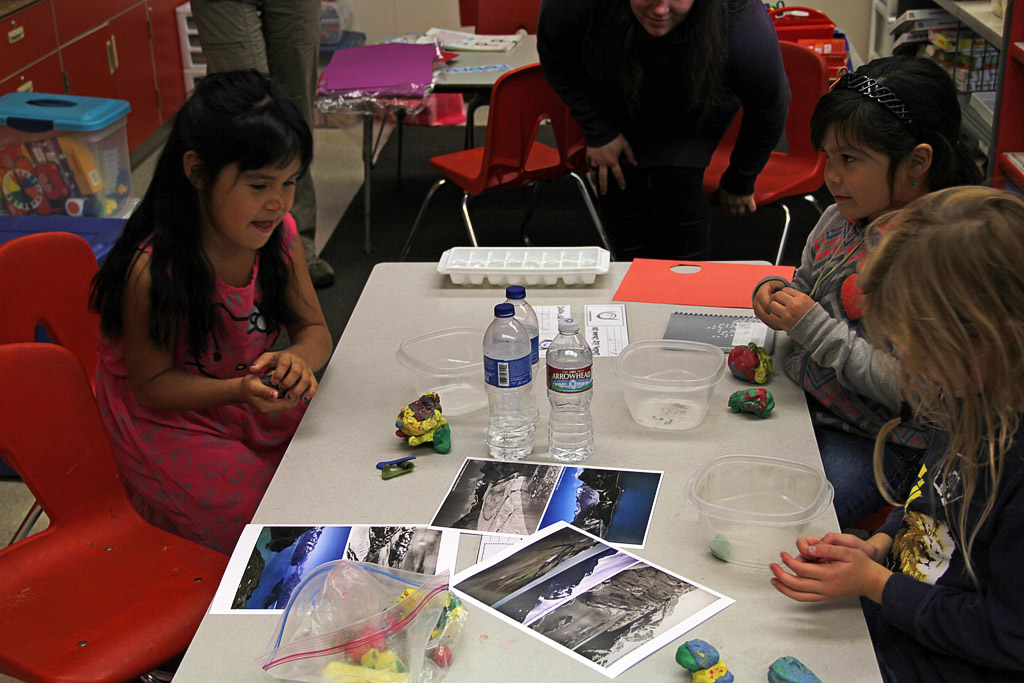
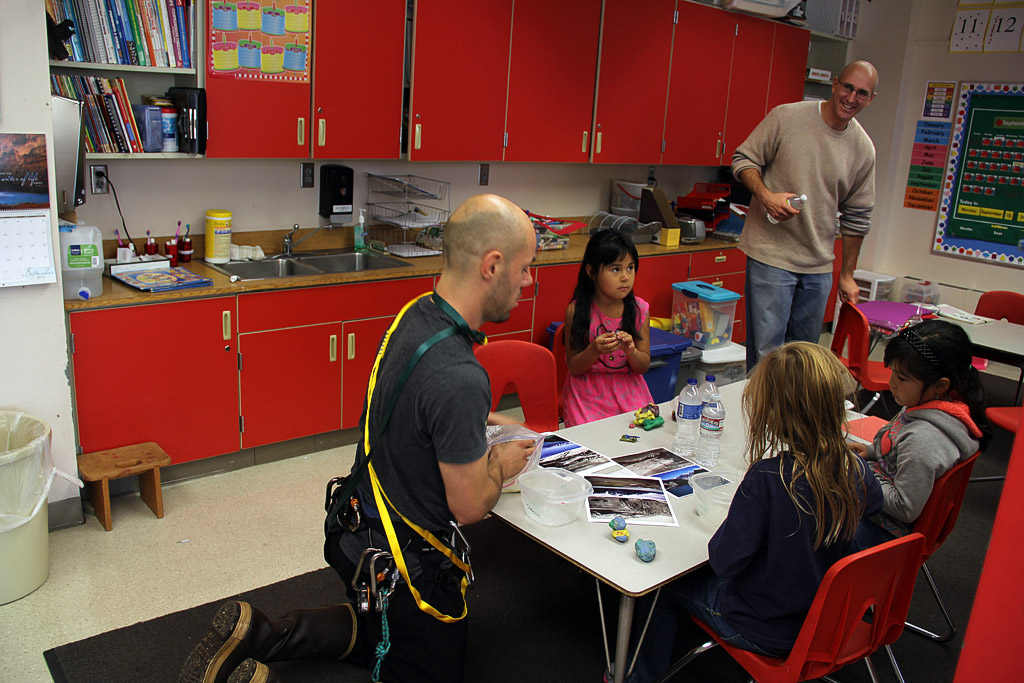
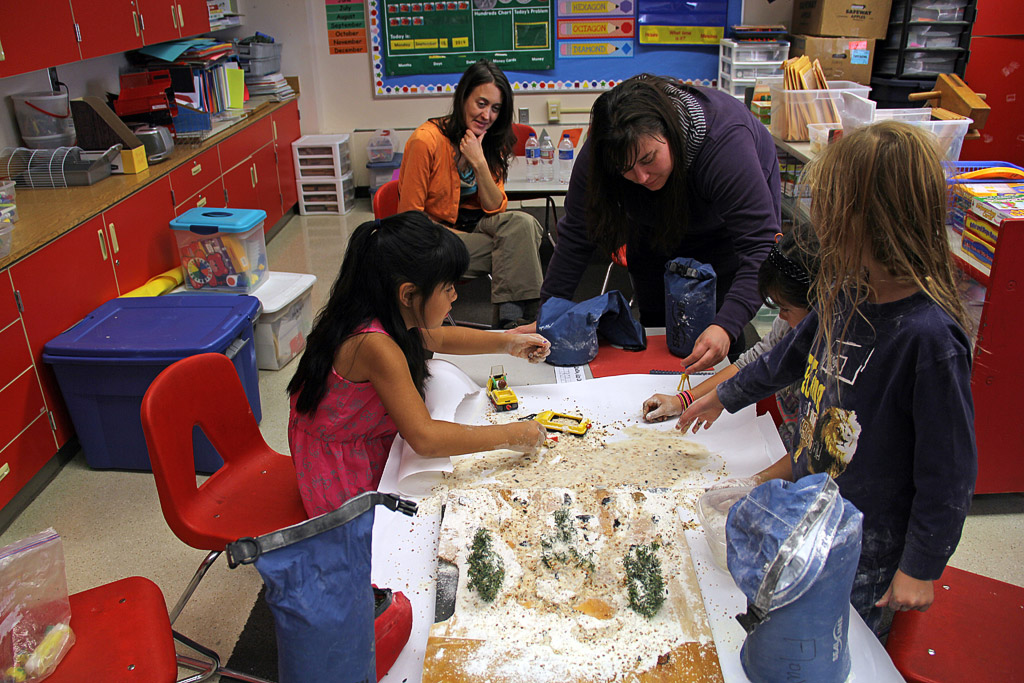
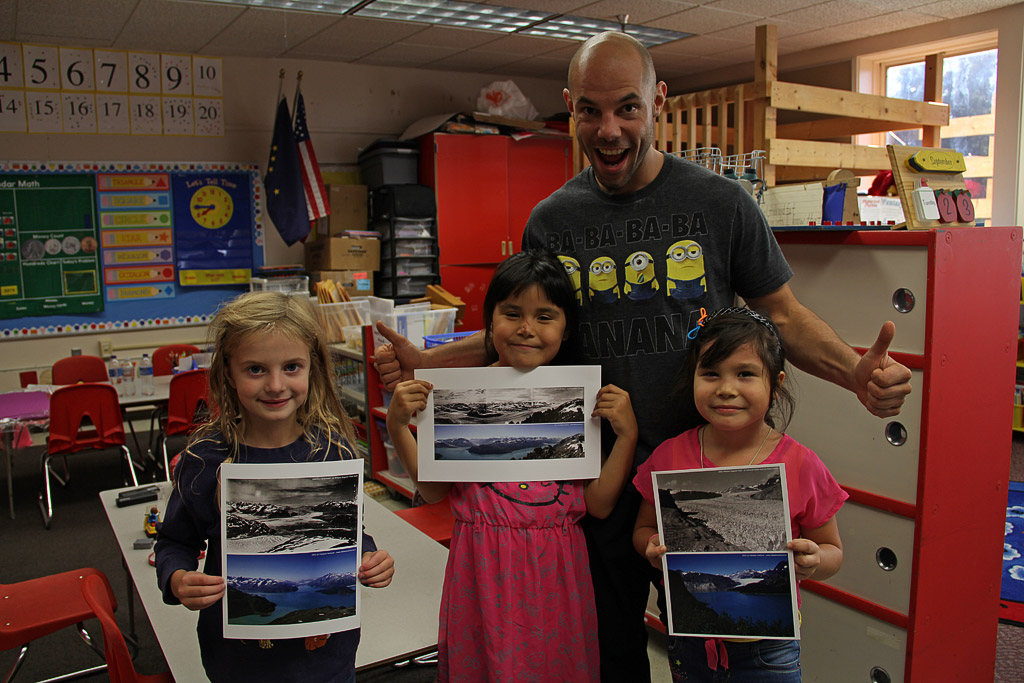
Our work begins immediately. The first group consists of the kindergarten girls. Three cute 5-year-old girls hang out with me for a couple of hours. I begin by putting on My scientific expedition outfit, thermal gloves, wolf hair cap, protective mask, harness, crampons and avalanche probe. The girls react enthusiastically to my parody of the “adventurous scientist.” The second activity focuses on glaciers. I show the girls the photographic comparisons provided to me by Fabiano Ventura, we identify the glaciers in the fjords and observe the change in the landscape. Then we build a small model with modeling clay: a continent and cover it with ice, let the ice melt and observe the melting of the glaciers and rising sea levels. The girls enjoy building the model and understand an important process.
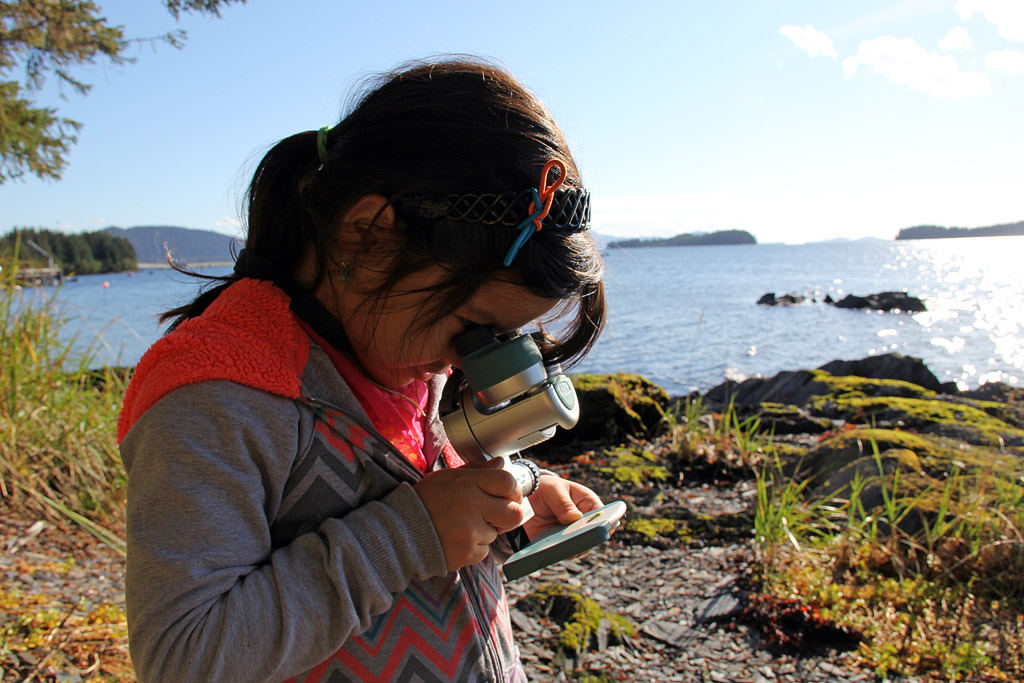
The second group is larger: about ten boys between the ages of 10 and 18. With them I can converse a little more. These boys get a sense of the Gulf landscape: large glaciers plunging into the sea. They look admiringly at Fabiano’s photographic comparisons and marvel at the immense change. After talking about glaciers we go out into the open air and spend a good half hour observing rocks and discussing the geology of the area. The same activities were repeated the next day in the village of Chenega Bay. Doing science outreach is important. Connecting directly with young people is important. I would like to thank Fabiano Ventura for providing us with his wonderful photo comparisons that helped us understand the changing landscape in Alaska.
Alessio Gusmeroli
International Arctic Research Center
Alaska Climate Science Center
University of Alaska, Fairbanks